Everything else
Life’s Extras.
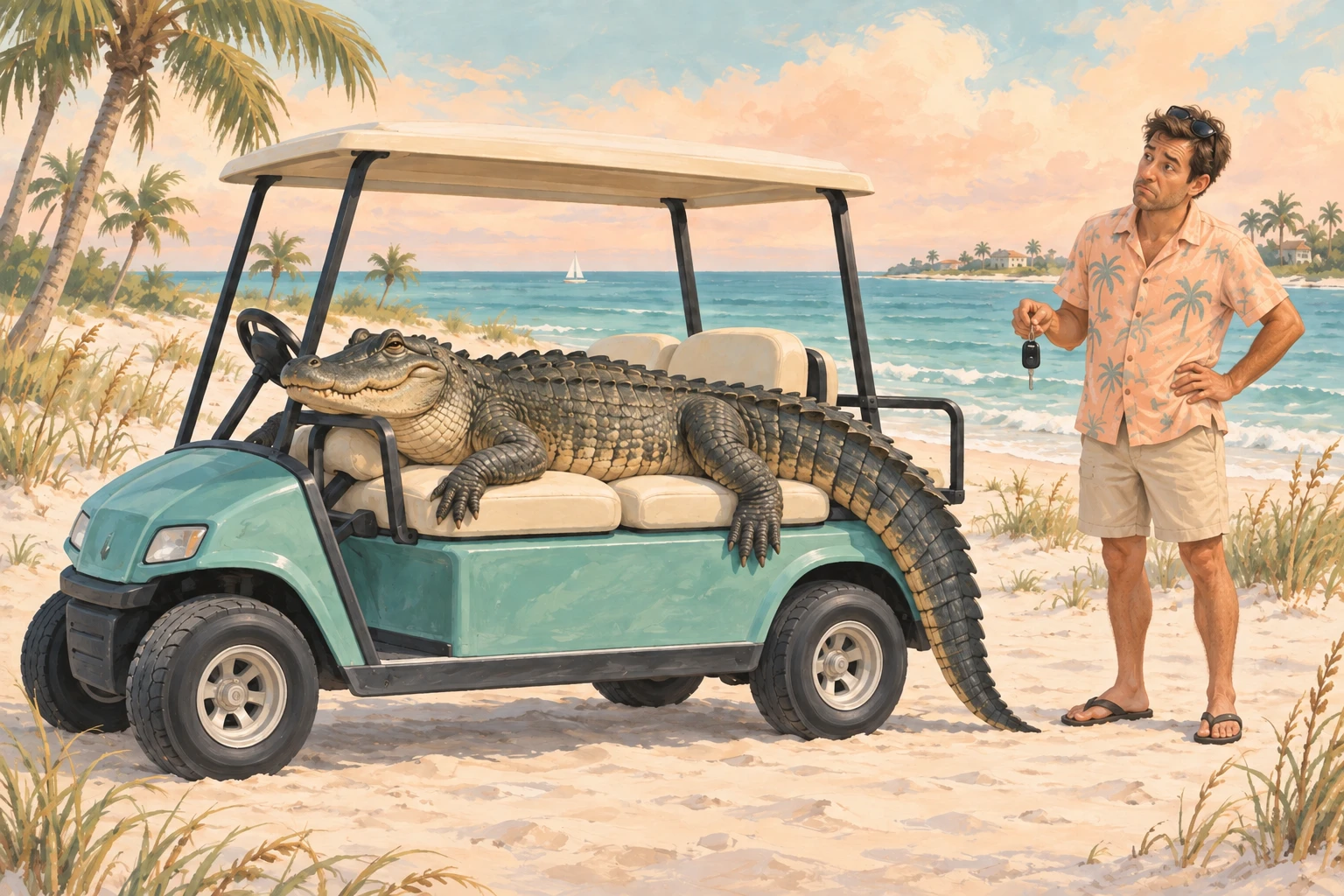
Pets, boats, jewelry, and the things that don’t fit in a box. Yes, we cover the golf cart. Even that time.
- Worth knowing
Umbrella
An extra million in protection — usually for less than a streaming subscription.
The one most people have never heard of → Pet
Vet bills without the gut-punch.
Learn more →Jewelry & valuables
The ring, the watch, the things your home policy caps too low.
Learn more →Flood
Usually not in your home policy. In Florida, that matters.
Learn more →Boat & watercraft
On the water, at the dock, on the trailer.
Learn more →Golf cart
Very Florida. Very insurable.
Learn more →Motorcycle & RV
For the weekends that matter most.
Learn more →Something else?
A horse, a drone, a wedding next spring. Ask.
Tell us what it is →
What are you looking to cover?
Pick one to start its quote. Elona prepares every quote herself, and you can send what you have at any point.
Not sure which one fits?Talk to Elona
The complete guide
Life’s Extras insurance, explained: the complete guide
Your home and auto policies were written for a house and a car. Pets, jewelry and collectibles, boats and jet skis, golf carts, motorcycles and RVs tend to fall between them: covered up to a small built-in limit, covered only in certain places, or not covered at all. Each one usually needs either an add-on to your home policy or a policy of its own.
This is the whole subject in one place. Each section is the short version of something I’ve written about at length, with the full post linked at the end. Where Florida and Illinois differ, the section is marked with the state.
The one idea behind all of them
Every extra raises the same two questions. Is the thing itself covered? The ring, the boat, the cart, the bike, and for how much. Am I covered if it hurts someone? The guest on the boat, the neighbor hit by the golf cart, the other driver. A home policy may answer the first in a limited way and the second not at all, and an auto policy usually answers neither. The sections below show where the line tends to fall for each one.
Jewelry, watches and collectibles
Most home and renters policies do cover jewelry, but as part of your belongings, with a ceiling. Florida’s consumer guidance lists the usual categories with special limits: jewelry, guns, furs, money, cameras, art and antiques. The Illinois Department of Insurance adds coins, computers, artwork and silverware to the list of special belongings whose payment is usually limited under a homeowners policy. The National Association of Insurance Commissioners says a standard policy might cover only a fraction of what your jewelry is worth.
That’s the point I most want people to hear: your collectibles and jewelry may not be fully covered by your home policy unless you schedule them or insure them separately. The ceiling isn’t usually on your declarations page. It sits in the policy form, often under “special limits of liability,” and it’s frequently a limit on theft in particular.
There’s a second gap too. The NAIC notes that most policies protect jewelry against theft, but you may need more coverage for damage or loss. A ring that slips off at the beach or a stone that falls out of its setting, what insurers call mysterious disappearance, often isn’t covered at all under the base policy. Collections bring their own problem: coins, stamps, art, memorabilia and wine tend to grow and gain value quietly, and the category limit doesn’t grow with them.
Read the full guides: Your home policy has limits on jewelry, watches and collectibles and Is my engagement ring covered by homeowners insurance?
Scheduling, explained
Scheduling means listing a specific piece on your policy, with a description and a value you and the insurer agree on. The Illinois Department of Insurance calls it a floater, or a scheduled personal property endorsement: coverage that “floats” with the item and covers it for more perils. In general, a scheduled piece is covered for its agreed value rather than a category cap, usually including mysterious disappearance, and usually wherever you take it.
You have three ways to close the gap, and which fits depends on what you own:
- Schedule the piece on your home or renters policy.
- Raise the category limit, where your policy allows it, which can suit many smaller pieces better than listing each one.
- Buy a separate valuables policy, which does the same job outside your home policy.
To set a value, insurers often want an appraisal. The NAIC notes that many insurers require one, that some policies require periodic reappraisal, and that you should keep photos of each item and a copy of the appraisal somewhere safe, with your home inventory. Ask how a claim on a scheduled piece is settled, too: some policies replace it through a jeweler, others pay you, and the wording decides.
Read the full guide: Appraisals: why they matter for jewelry coverage
Pets
Pet insurance doesn’t make routine care cheaper. It’s built for the unplanned bill: the swallowed sock, the torn ligament, the diagnosis nobody saw coming. Most plans are either accident-only, which covers injuries, or accident-and-illness, which adds sickness, where many of the biggest bills come from. With most plans you pay the vet, send the invoice, and the plan pays you back according to its deductible, its reimbursement percentage and any cap.
The surprise is usually pre-existing conditions. Most plans won’t pay for anything your pet was treated for, or showed signs of, before coverage began or during the waiting period, so buying while your pet is young and healthy matters more than any other choice.
Florida · Switch to
In Florida, the pet insurance law (Fla. Stat. 627.71545) makes plans show their cards. Before you buy, the insurer has to disclose whether it excludes chronic, congenital, hereditary or pre-existing conditions, and whether it reduces coverage or raises premiums because of your claims, your pet’s age or a move. A plan can’t have a waiting period for accidents, and its waiting period for illness, or for orthopedic conditions not caused by an accident, can’t be longer than 30 days. And you have 30 days after you receive a new policy to return it for a full refund, as long as you haven’t filed a claim.
Illinois · Switch to
In Illinois, the plan’s own documents set the rules. Ask for the sample policy before you buy, and read the definition of “pre-existing condition,” the waiting periods, the exclusions, the cap, and whether the price can rise as your pet ages.
Read the full guides: Is pet insurance worth it? and Pre-existing conditions, and accident-only vs accident-and-illness plans
Boats and jet skis
A home policy usually covers a boat only a little. Florida’s consumer guidance notes that standard home policies usually limit coverage on valuables such as boats, and the Illinois Department of Insurance describes a watercraft endorsement that broadens home liability for small motorboats and sailboats, adding that past a specified length you’ll need a separate boat or yacht policy. Canoes and kayaks may be fine as belongings. Larger powerboats, anything kept at a marina and personal watercraft usually need their own policy, which can cover the hull and motor, your liability on the water, medical payments for people aboard, the trailer and towing.
Is it required? Not by any Florida or Illinois law I’ve found, for a boat you own and use yourself. The requirement, when there is one, tends to come from the lender that financed the boat or the marina that rents you the slip.
Florida · Switch to
In Florida, the rules that touch insurance are about who drives and who rents. Anyone born on or after January 1, 1988 needs a boating safety education ID to operate a vessel of 10 horsepower or more, with some exemptions (Fla. Stat. 327.395), and no one under 14 may operate a personal watercraft (Fla. Stat. 327.39). A rental business has to carry insurance before it rents a boat out, and can’t knowingly rent anything but a human-powered vessel to someone under 18 (Fla. Stat. 327.54). Motorboats have to be registered, which isn’t the same as insured (Fla. Stat. 328.48).
Storms are the other Florida question. Many boat policies written here expect a hurricane plan, and a marina can’t make you remove your boat after a hurricane watch or warning is issued, with exceptions for deepwater seaports and the Coast Guard’s “Yankee” port condition (Fla. Stat. 327.59). Boat insurance and hurricane plans in Florida.
Illinois · Switch to
In Illinois, anyone born on or after January 1, 1998 needs a boating safety certificate to operate a motorboat over 10 horsepower, children under 10 may not operate a motorboat at all, and owners may not let someone operate who doesn’t meet the rules (625 ILCS 45/5-18). Policies often care who was at the helm, so check that before you lend the boat or the jet ski.
Read the full guides: Does homeowners insurance cover my boat? and Jet skis and personal watercraft: what to know
Florida · Switch to
Golf carts and low-speed vehicles in Florida
In Florida law, a golf cart is built for the golf course and can’t go faster than 20 miles per hour (Fla. Stat. 320.01). Golf carts operated under the state’s golf cart rules don’t have to be registered (Fla. Stat. 320.105), and Florida’s PIP and property damage requirement is tied to registration, so as far as I can find the state doesn’t require insurance on an ordinary cart. Your HOA or community may.
The state does set where and how you drive one: only on roads the county or city has designated, generally between sunrise and sunset, and on public roads a driver under 18 needs a learner’s license or driver license, while a driver 18 or older needs a government-issued photo ID (Fla. Stat. 316.212). A low-speed vehicle is different. It’s a four-wheeled vehicle with a top speed above 20 and up to 25 miles per hour (Fla. Stat. 320.01), and it must be titled, registered and insured, with a valid driver license for whoever drives it, on streets posted at 35 miles per hour or less (Fla. Stat. 316.2122). The FLHSMV says that insurance is the same PIP and property damage liability a car needs.
The insurance gap is your home policy. Home policies usually exclude motor vehicles and carve out golf carts only narrowly, often on your own property or on a course. Once the cart is on a community street, you may be on your own unless you have a golf cart policy.
Read the full guides: Do I need insurance for a golf cart in Florida? and Golf cart vs low-speed vehicle (LSV)
Motorcycles in Florida
Florida doesn’t ask for proof of insurance to register a motorcycle; the FLHSMV’s registration procedure lists motorcycles among the vehicles that don’t need it. The trouble comes after a crash. If you’re the at-fault rider in a crash with injuries, Florida’s financial responsibility law expects you to have bodily injury and property damage liability, and without it the state can suspend your license and registrations for up to three years (Fla. Stat. 324.051).
Your own injuries are the other gap. Florida PIP is built around vehicles with four or more wheels (Fla. Stat. 627.732), and the FLHSMV says the PIP on a car policy isn’t enough for a motorcycle rider or passenger. And the helmet rule is an insurance rule too: you can ride without one only if you’re over 21 and covered by a policy with at least $10,000 in medical benefits for motorcycle crash injuries (Fla. Stat. 316.211). That’s the statute’s figure, not my suggestion.
Read the full guide: Motorcycle insurance basics for Florida riders
Illinois · Switch to
Motorcycles in Illinois
In Illinois a motorcycle needs liability insurance like a car. The Secretary of State lists motorcycles among the vehicles that must be insured when they’re driven, and the minimums are the same: $25,000 for injury to one person, $50,000 for injury to two or more people and $20,000 for property damage in one crash (625 ILCS 5/7-601 and 7-203). The minimum doesn’t cover the bike itself or your own injuries, so ask about collision, comprehensive and medical payments too.
RVs: a vehicle and a home
An RV is a vehicle while it’s moving and a home once it’s parked. On the road it’s insured much like a car: liability, collision and comprehensive, uninsured motorist. At the campsite the risks look like a house: your belongings inside, liability when someone trips on your steps, the awning and the solar panels. A policy built for weekend trips covers mostly the vehicle part. If you live in your RV most or all of the year, tell your insurer, because many offer full-timer coverage that adds protections closer to a homeowners policy. A trailer’s liability while it’s hitched often comes from the truck’s policy, but the trailer and what’s in it usually need their own coverage.
Florida · Switch to
In Florida, the law describes RVs, from travel trailers to motor homes, as built for temporary living quarters (Fla. Stat. 320.01). A motor home needs PIP and property damage liability to be registered, like a car; a trailer needs no proof of insurance to register, which means nobody checks, not that it’s covered.
Illinois · Switch to
In Illinois, the Secretary of State lists recreational vehicles among the vehicles that must carry liability insurance, and says trailers aren’t required to (625 ILCS 5/7-601). Not required isn’t the same as covered.
Read the full guide: RV insurance: driving it vs living in it
Umbrella and flood have their own guides
Two more of Life’s Extras get a complete guide of their own. An umbrella policy sits above the liability on your home, your car and, if it’s set up that way, your boat and your golf cart. Flood insurance covers the water that rises from outside, which home, condo and renters policies leave out.
Finding the gaps, in order
- Make a list of the extras you own: pets, pieces you’d hate to lose, anything with a motor that isn’t your car.
- Find the special limits in your home or renters policy form, not just the declarations page.
- Gather appraisals, receipts and photos for anything you’d schedule.
- Check where each vehicle is covered: on your property, on the road, on the water, at the campsite.
- Check who drives: teens, guests and friends borrowing the boat or the cart.
- Tell me the week something new arrives, before its first trip out.
Questions people ask
Are my collectibles covered by my home insurance?
Partly. They're usually covered as part of your belongings, but many policies cap what they pay for categories like coins, art, antiques and silverware, and only for the events the policy names. To cover a valuable collection fully, it usually needs to be scheduled or insured on its own policy. How the limits work.
What does it mean to "schedule" an item?
You list a specific piece on your home or renters policy, describe it, and agree on its value, usually from an appraisal or receipt. The Illinois Department of Insurance calls this a floater or scheduled personal property endorsement, and says it covers those items for more perils.
Do I need a separate policy for each of these?
Not always. Some extras are add-ons to your home policy, like a scheduled ring or a watercraft endorsement for a small boat. Others, like pet, boat, motorcycle and RV coverage, are usually policies of their own.
Does my motorcycle need insurance in Illinois?
Yes. Illinois requires liability insurance on motor vehicles driven on its roads, and the Secretary of State lists motorcycles among them, at the same minimums as a car (625 ILCS 5/7-601 and 7-203).
When should I tell you about something new?
The week you get it, before its first trip out. A new boat, golf cart, ring, puppy or RV is easiest to cover before anything happens to it.