Minimum coverage — what does that really mean?
Why the cheapest legal policy can be the most expensive one you own.
video coming soon — the written version is below
The minimum is the least your state lets you carry and still drive legally.
It keeps you legal. It doesn’t keep you whole.
What “minimum” is
It’s a legal floor, not a recommendation. Here’s what it does, and what it doesn’t:
- Does
Keeps you legal to drive
- Does
Pays others for damage you cause, up to small limits
- Doesn’t
Fix your own car
- Doesn’t
Cover anything above those limits
Which state do you drive in?
Florida and Illinois handle minimum coverage very differently, so pick yours. Everything below changes to match.
No-fault state
Florida’s minimum
After a crash, your own policy pays for your own injuries first, whoever caused it. That’s what “no-fault” means.
| Pays other people | |
|---|---|
| Injuries you causeBodily injury liability | $0Not required for most drivers |
| Damage you causeProperty damage liability | $10,000 |
| Pays you | |
| Your injuries, whoever caused itPersonal injury protection (PIP) | $10,000 |
| Your injuries, if the other driver has no insuranceUninsured motorist | $0Optional |
Good to know in Florida
- PIP pays part of your bills. 80% of medical bills and 60% of lost income, up to $10,000 in total, plus a $5,000 death benefit.
- See a doctor within 14 days, or PIP won’t pay your medical bills.
- No emergency medical condition? PIP pays up to $2,500, not $10,000.
- Bodily injury liability can become required, for example after certain crashes or a DUI conviction.
- Has Florida ended no-fault? No. The 2026 bills to replace PIP died in committee.
Florida minimums as of September 2026. Laws change, and Elona confirms the current figures when she quotes you.
At-fault state
Illinois’s minimum
The driver who causes a crash pays for the damage and injuries, through their liability coverage. That’s what “at-fault” means.
| Pays other people | |
|---|---|
| Injuries you causeBodily injury liability | $25,000per person · $50,000 per accident |
| Damage you causeProperty damage liability | $20,000 |
| Pays you | |
| Your injuries, whoever caused itPersonal injury protection (PIP) | $0Not required |
| Your injuries, if the other driver has no insuranceUninsured motorist | $25,000per person · $50,000 per accident |
How to read “25/50/20”
Illinois limits are often written as three numbers:
Good to know in Illinois
- Underinsured motorist coverage becomes required if you choose uninsured motorist limits above the minimum.
- Damage to your own car from an uninsured driver isn’t part of the minimum. It’s an optional add-on.
Illinois minimums as of September 2026. Laws change, and Elona confirms the current figures when she quotes you.
Where it runs out
Here’s one ordinary moment. You’re backing out of a parking space and reverse into a supercar. Think Lamborghini. Nobody is hurt, but the repair bill arrives.
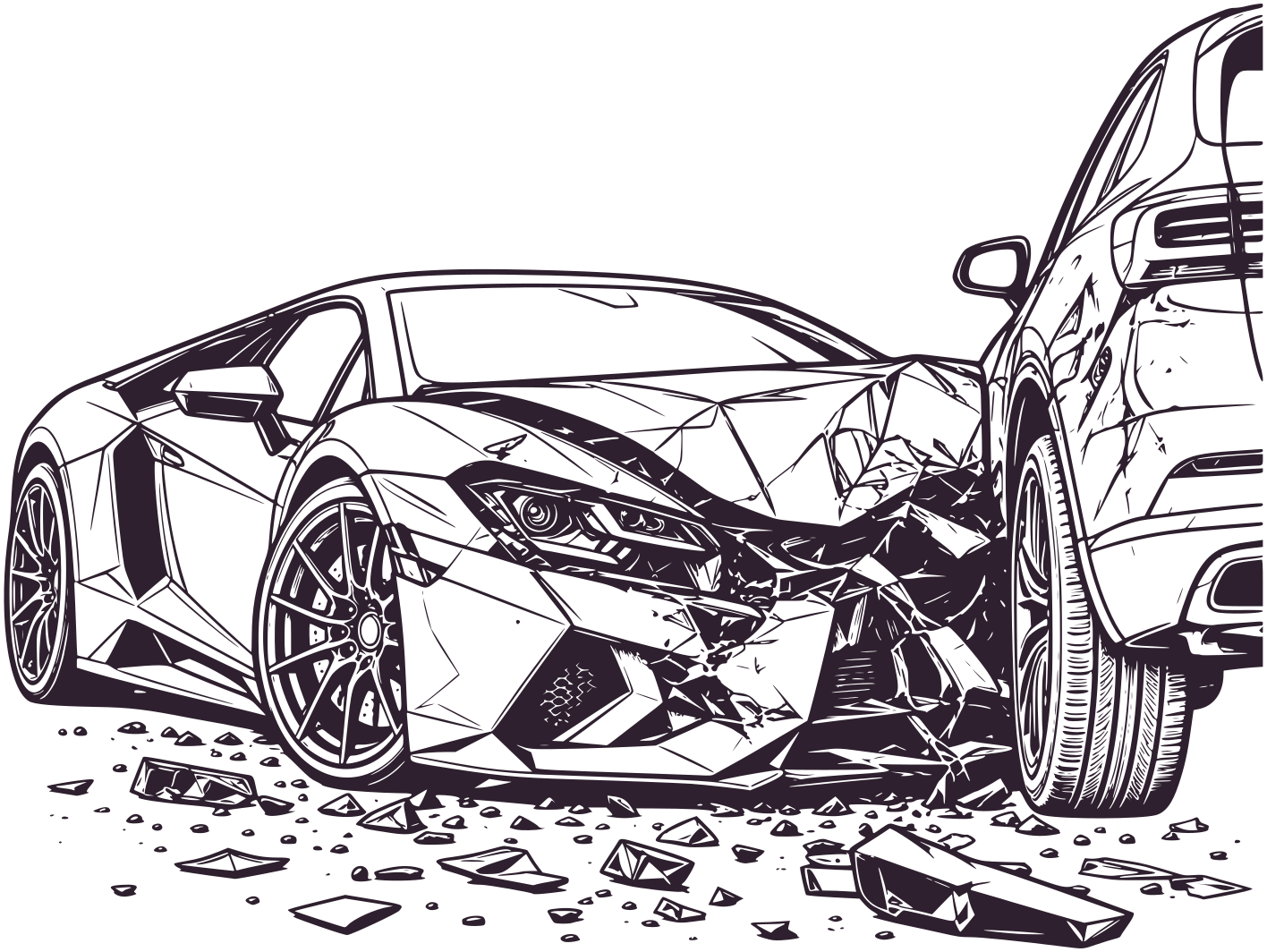
Repair estimate example
- Front bumper and carbon-fibre splitter
- Headlight, hood and sensors
- Specialist paint and labour
- Rental while it’s in the shop
Total$60,000
Your property damage liability pays for that car, but only up to its limit. Here’s that $60,000 bill with your state’s minimum, drawn to scale:
Showing Florida.
Showing Illinois.
And that’s with nobody hurt. If the other driver had been injured, a Florida minimum policy pays nothing toward their injuries, and those bills can be far larger than any repair.
And that’s with nobody hurt. If the other driver had been injured, an Illinois minimum policy pays up to $25,000 for that person, and a serious injury can cost far more.
The cheapest legal policy can become the most expensive one you own. When something goes wrong, the gap is yours.
What Elona usually suggests
No two people need the same limits, so there’s no single right answer. Think of it as three steps up:
- 1
State minimum
Legal to drive. Little else.
- 2
Matched to your life
Limits that fit what you own and earn, plus cover for your own car if replacing it would hurt.
- 3
Room to spare
An umbrella on top, once you own a home or have savings worth protecting.
Rules of thumb
- Match what you could lose. Carry liability limits that fit what you own and earn, not the lowest the law allows.
- Protect yourself from other drivers. Ask about uninsured and underinsured motorist coverage, so someone else’s minimum doesn’t become your problem.
- Pick a deductible you could pay tomorrow without borrowing.
- Own a home or have savings? Ask about an umbrella.